Students today rarely read only words, but constantly move between images, video, text, and design in their everyday lives. Outside the classroom, they scroll through social media and short videos, making meaning across multiple modes at once. By contrast, many language classrooms still approach reading mainly as a verbal activity, focused on decoding language, comprehension questions, and grammar, with images often used only as support rather than as meaning-making systems in their own right, largely due to traditional textbook design (Hallet, in Lieber, 2013).
Graphic narratives offer a practical way to rethink this approach by integrating visual and verbal modes of meaning-making and foregrounding how images and text interact (CAST, 2024: 3.3). As a broad category, graphic narratives can include picture books, comic strips, graphic novels, manga, graphic memoirs, webcomics, and even wordless visual stories, all of which combine sequential art with varying degrees of textual elements. A key example is Persepolis (2000-2003) by Marjane Satrapi, a memoir that offers rich opportunities for engaging with personal narratives alongside world history, while inviting readers to interpret meaning through the interplay of stark visual style and concise language. In the German-language context, graphic novels by Birgit Weyhe, such as Rude Girl (2022), provide culturally and historically grounded perspectives, using distinctive visual storytelling to explore themes of identity, memory, and transcultural experience. Together, these examples highlight how contemporary graphic narratives can foster a more holistic, multimodal understanding of reading.
Why graphic narratives change reading
Graphic narratives combine words and images in ways that are closely interdependent, with meaning emerging not only through dialogue but also through facial expression, gesture, layout, colour, framing, and pacing (Kress & Van Leeuwen, 1996). Students therefore need to read across all of these elements simultaneously, which shifts what reading involves: instead of simply decoding language, they begin to interpret meaning, asking why a scene is framed in a particular way, what the image contributes beyond the text, and what may be left unsaid (Serafini, 2014).
In my own teaching of German, I have found that students are significantly more engaged when they can actually see the narrative unfold, as the visual context provides accessible entry points into meaning, particularly when their vocabulary is still developing. This in turn builds confidence and encourages richer discussion. At the same time, graphic narratives should not be mistaken for simple texts, as they are in fact highly complex, with meaning distributed across multiple modes that must be actively integrated and interpreted by the reader. A key shift occurs when students realise that they are constantly moving between visual and verbal information, following narrative development across panels, connecting dialogue with gesture and expression, interpreting emotion through both image and language, and noticing how pacing and layout actively shape meaning. As this awareness develops, their language also becomes more precise, moving beyond simple statements such as “He is sad.” to more analytical descriptions of how posture, framing, and visual composition create that sense of sadness.
Graphic narratives also support a wide range of learners within the same classroom, as meaning is distributed across both visual and verbal modes, allowing students to enter the text from different starting points. This is particularly valuable in linguistically diverse classrooms, where students with different levels of language proficiency are still able to contribute meaningfully. At the same time, they enable engagement with complex themes such as migration, identity, and memory, making culture and history more tangible by presenting them through lived experience rather than abstract information.
From rationale to classroom practice
In practice, this approach can be implemented as a structured sequence moving from supported reading to active production. In my classes, I begin with language scaffolds as homework, including key vocabulary, useful phrases and sentence starters, and guiding questions that familiarise students with central themes before engaging with the text. This may also involve exploring the artist’s homepage to gain a sense of their visual style and recurring themes. I then introduce short excerpts to support vocabulary development and comprehension, guiding students to link words and phrases to visual cues such as gesture, facial expression, and setting, enabling them to infer meaning even with limited linguistic resources.
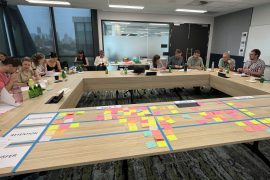
This is followed by more focused reading tasks in which students analyse how meaning is constructed across panels. They examine, for instance, how dialogue interacts with visual elements, how layout shapes pacing, or how emotion is conveyed visually rather than explicitly stated. A structured placemat activity can be integrated into group work: students first note their individual interpretations in designated sections, before collaboratively synthesising their ideas in a shared centre space. Peer, group, and whole-class discussions are central here, as students compare interpretations and justify their ideas using evidence from both image and text.
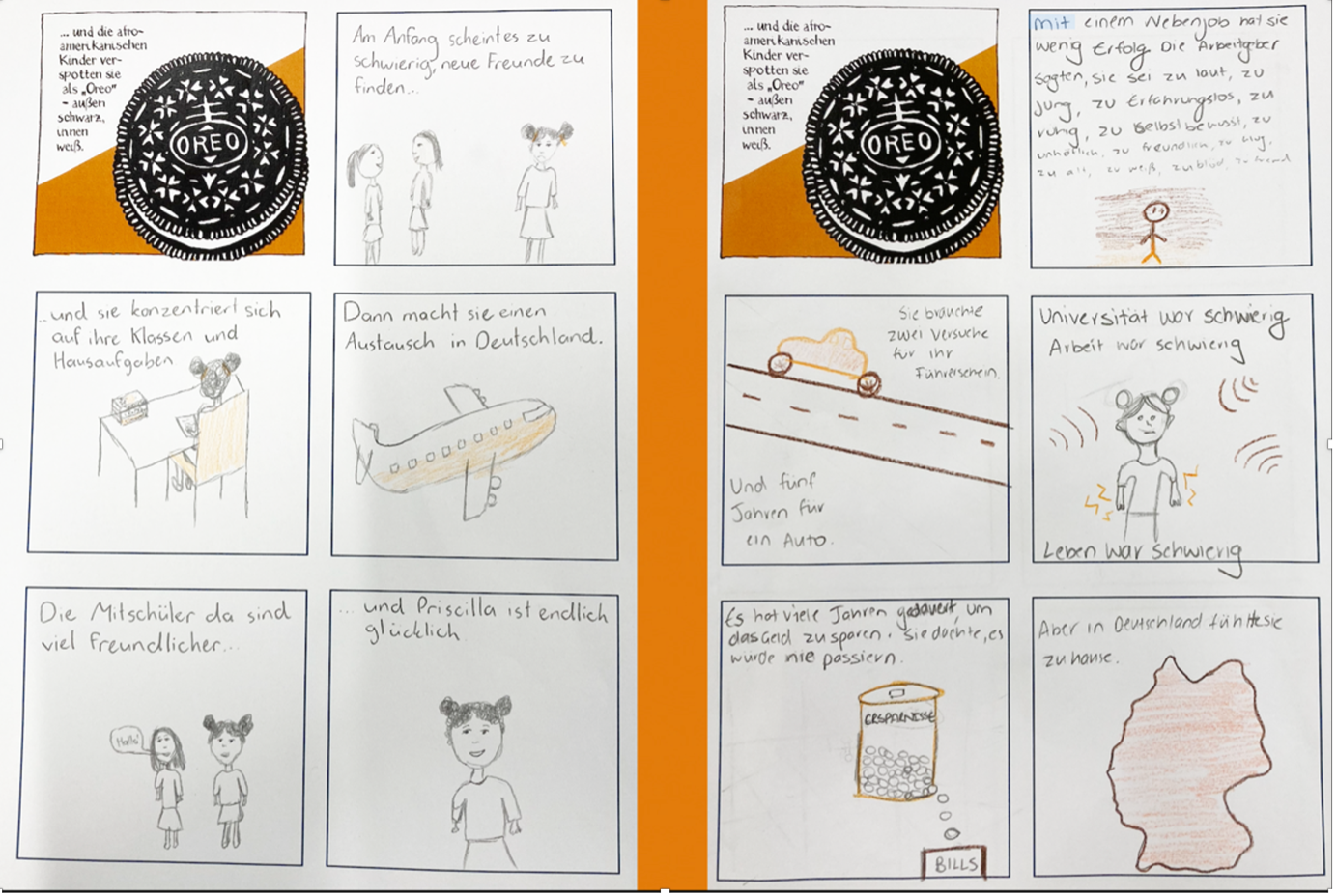
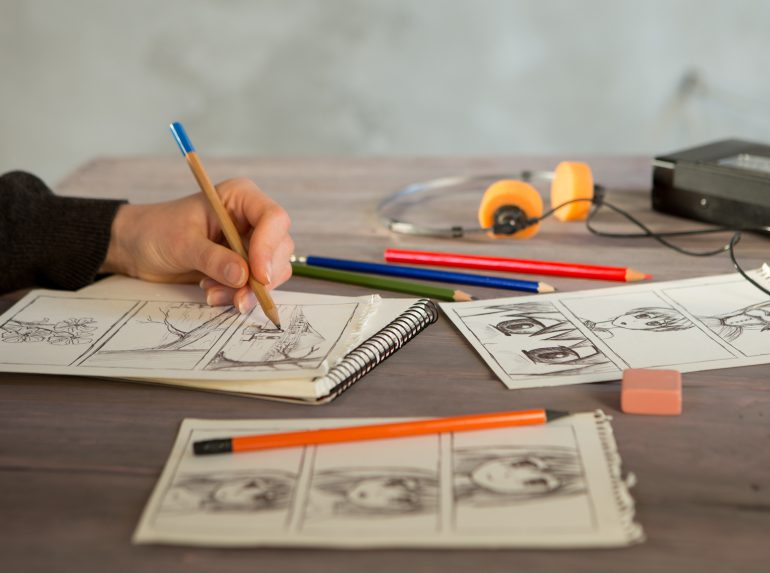
Building on this, students create their own short graphic narratives to consolidate language and demonstrate understanding. They may work with templates, adapt existing stories, or develop original narratives, focusing not only on linguistic accuracy but also on how meaning emerges through the interplay of visual and verbal elements. In this way, the creative production tasks reinforce both language learning and multimodal literacy.
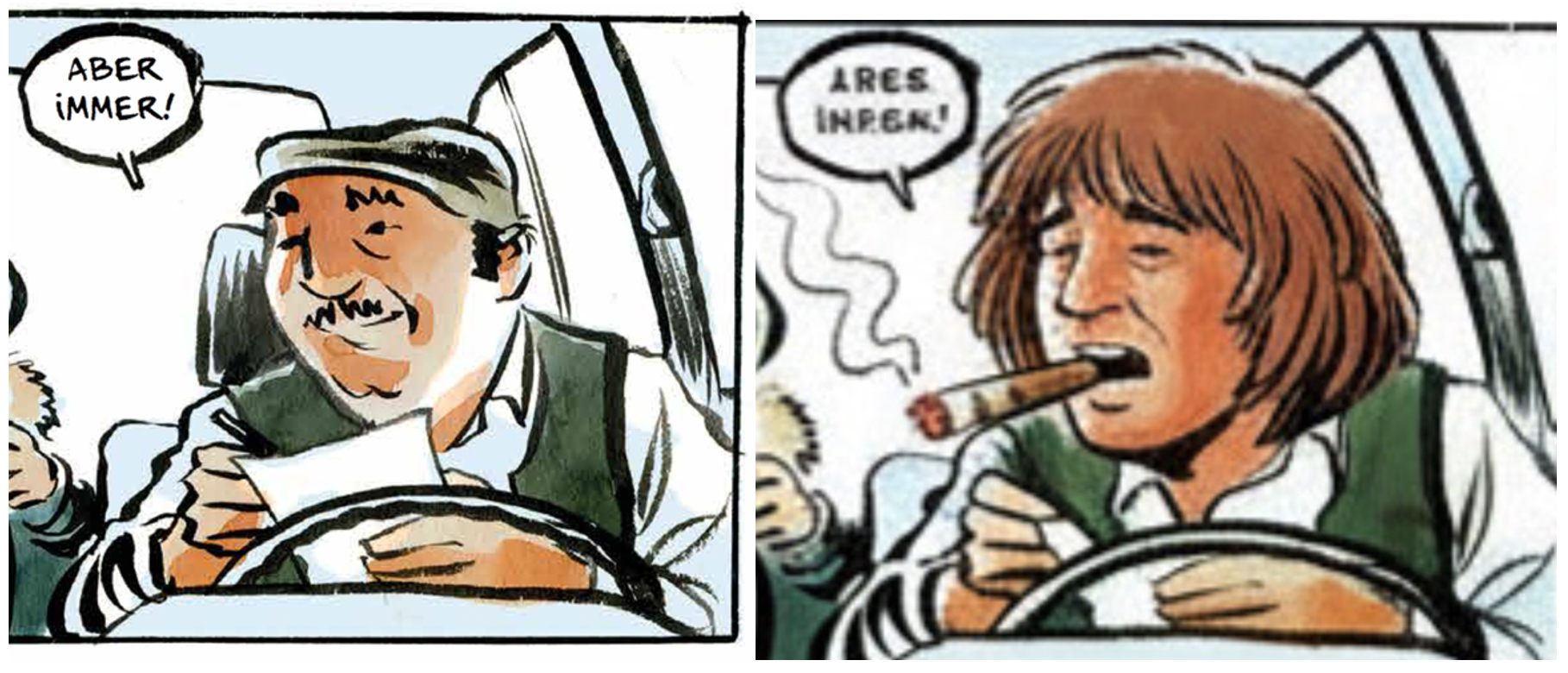
Digital tools can extend this work further. Using simple image editing software or AI-supported platforms, students experiment with changes in colour, perspective, or composition and reflect on how these affect interpretation. While creative, these activities are also analytical, requiring deliberate decisions about how meaning is shaped through visual design.
Student observations and feedback
Student reflections indicate that working with graphic narratives has a clear impact on both engagement and language learning. One student noted: “I think that graphic narratives are very suitable for use in GFL instruction, because they provide a way to explore important and meaningful themes such as home, belonging and identity even in beginner classes. They also allow authentic engagement with German culture and language in a reading format without overwhelming students with a large block of text.” Other written reflections highlight three recurring themes: increased confidence in reading longer texts, improved ability to infer meaning from visual cues, and stronger participation in classroom discussion due to the accessibility of multimodal input, which also enables more flexible, individual approaches to interpretation. Several students also remarked that they “understand more than expected” even with unfamiliar vocabulary, as images and layout support meaning-making and sustain engagement.
Taken together, these reflections suggest that graphic narratives not only support comprehension but also lower affective barriers to reading, enabling more active participation in interpretive and analytical classroom work.
Reading as meaning-making
Using graphic narratives is not simply about adding visuals to reading tasks, but about reshaping how reading is understood in the classroom. Reading becomes multimodal, with meaning constructed across image and language through their interaction and remaining open to interpretation. As a result, students are no longer passive readers but active interpreters who consider how meaning is made and how it can shift.