
What should distinguish a graduate in the age of AI?
byThe case for reinterpreting our graduate qualities Discussion of artificial intelligence in higher education has largely focused on assessment, academic integrity and new technologies….
 Teaching@Sydney
The case for reinterpreting our graduate qualities Discussion of artificial intelligence in higher education has largely focused on assessment, academic integrity and new technologies….

When I first started teaching international students back in 2023, my classrooms were noticeably and unexpectedly quiet. The silence was neither confusion nor disengagement;…

What does it mean to design assessments to be inclusive, valid and fair? Why does it matter? Whose responsibility is it? How do we…

Australia’s universities have never been more internationally diverse – and nowhere is that clearer than at the University of Sydney. Yet sit in on…

As an educator in Gender Studies, I am constantly guided by feminist values in recognising diversity and power hierarchies in the classroom. Out of…

I, Ruth, lived in a student hall of residence during my first year at university and generally attended most lectures and seminars, excited by…
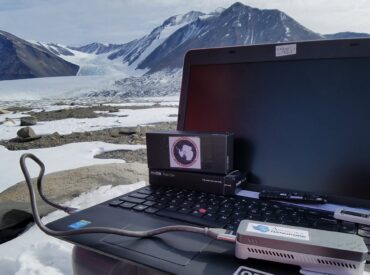
Some of the most engaging learning experiences happen when students stop analysing data someone else collected, and start generating it themselves. Recent advances in…
Accelerating a University-wide conversation about learning, graduate capability and the student experience Universities often talk about preparing students for the future. The challenge with…

Back in 2023, in the article Unravelling the teaching-research nexus, I explored one of higher education’s most enduring assumptions: that teaching and research naturally…

Thank you to all of you who have taken the time to share your experience and reflections as part of the 2026 Sydney Teaching…