Group work is a fundamental aspect of active learning, providing students with opportunities to collaborate, problem-solve, and develop essential teamwork skills. It enables students to engage in peer learning, exchange diverse perspectives, and develop communication and leadership abilities, as addressed in the University of Sydney’s graduate qualities.
Despite these benefits, group work formation faces significant challenges. While some students find their group work to be one of the most rewarding experiences, others struggle with uneven workload distribution, free-riding group members, and unproductive teams.
To address these challenges, Simon Loria from the Discipline of Business Analytics, supported by Jo Nash and Tianya Chen from the Business Co-design team, introduced the group randomisation approach to QBUS3350, a project management unit taught in the newly renovated PNR learning studio. This approach created a more equitable, diverse and inclusive learning environment that enhances student engagement and collaboration, builds connections and friendships, and contributes to both academic success and a stronger sense of belonging.
How does it work?
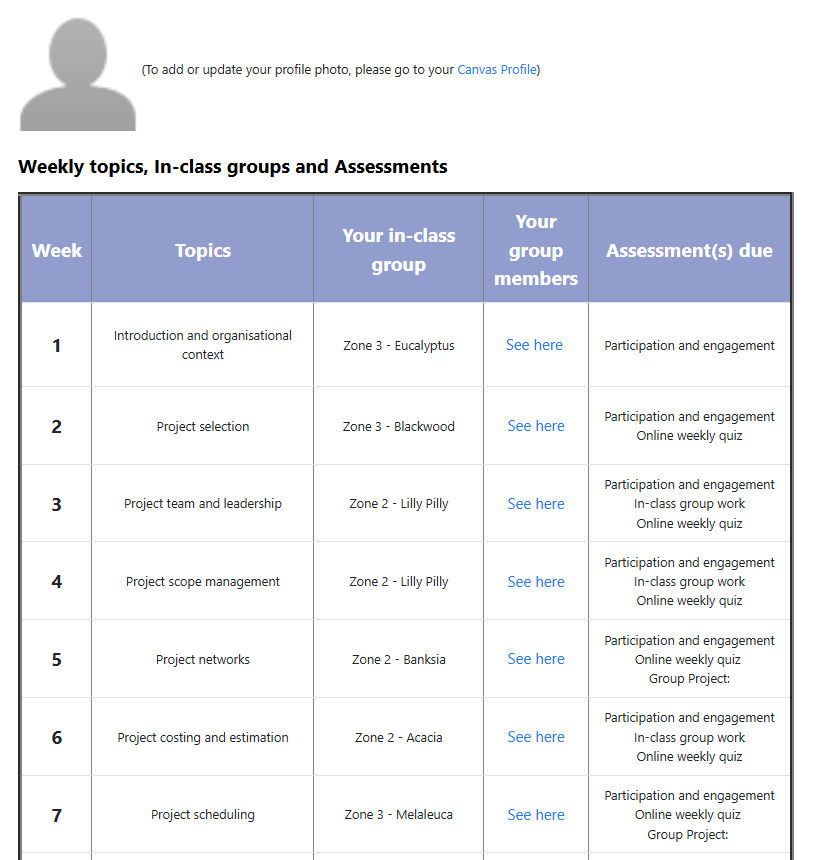
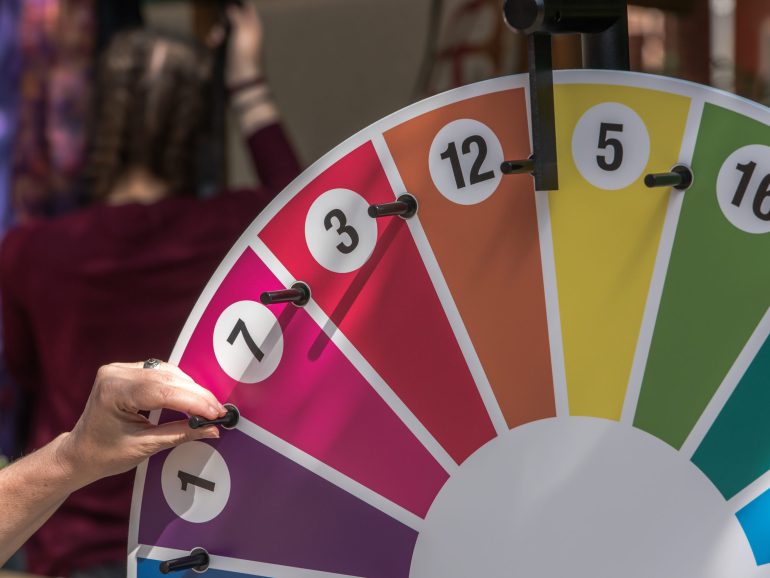
With the help of coding*, we randomly assigned students to new in-class groups each week from weeks 1 to 7; from week 8 onwards, students remained in their project groups to work on a major group assignment. To ensure each student had the opportunity to develop leadership experience, each group also had a randomly assigned leader and a deputy leader each week, allowing all to take turns in leadership roles.
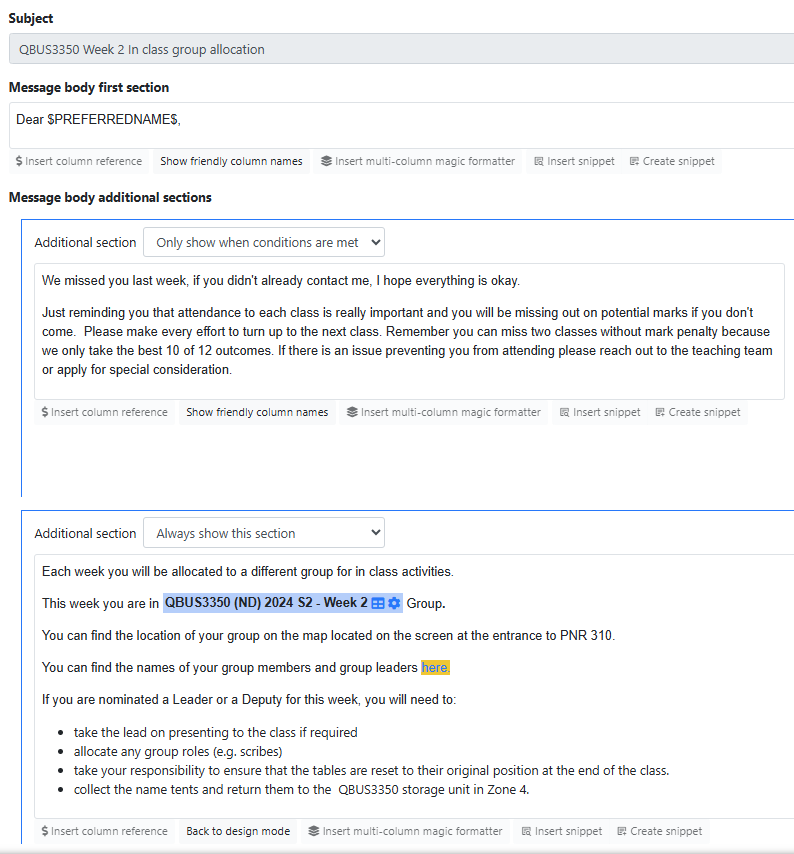
To make the process easy to follow, we embedded an SRES portal in Canvas where students could see their weekly group allocation and group members. We also sent weekly emails in the first three weeks to help students locate their assigned groups and find their group members in the SRES portal to improve clarity.
The class was delivered in a 3-hour workshop/lectorial focusing on group work. We opened each session with an icebreaker activity
designed to encourage interaction within newly formed randomised groups, followed by a one-hour lecture. During the lecture, two tutors circulated the room to mark attendance, monitor participation, and build rapport with students. Afterwards, students were split into two sections, each facilitated by a tutor, continuing group work on practical exercises. In the end, the entire class reconvened to discuss insights and key takeaways.
*We used Python to create new groups for each week by randomly shuffling the list of students and assigning them to different groups before the semester started. The assignment was adjusted after the census date.
What did we learn from this experience?
Based on the focus groups with students and tutors, we found that randomised group formation offers a more inclusive and transformative learning experience in the following four ways:
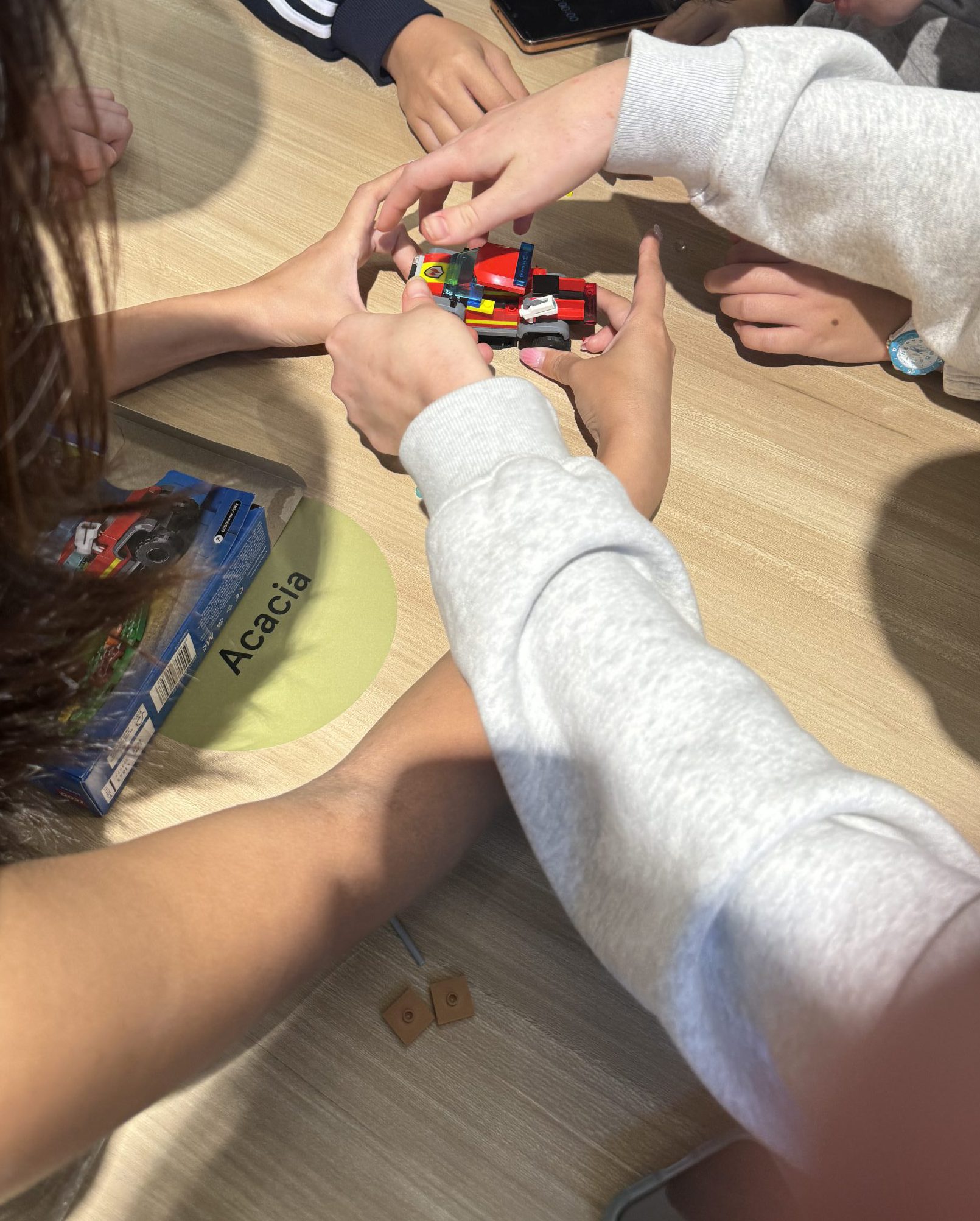
1) Creating a diverse, equitable and inclusive learning environment
Group randomisation fosters diversity by bringing together students from different backgrounds and with varying perspectives. Studies have shown that diverse groups enhance problem-solving and critical thinking by bringing different viewpoints and experiences into discussions. This also helps break down social barriers, promote inclusivity and provide all students with a more equitable learning environment.
The extroverted or highly participatory, engaging students chat with other students at their table who aren’t really engaging that much…they trying to more include students that are at their table.
QBUS3350 tutor, 2024, focus group
2) Enhancing student engagement and collaboration
Group randomisation can significantly improve student participation and collaborative skills. When students are regularly exposed to new peers, they learn to adapt to different communication and collaboration styles.
The randomisation was strongly liked as it helped students get to know more people than a standard tutorial.
QBUS3350 student, 2024, focus group
It also reduces the risk of disengagement that can arise in fixed or self-selected groups, where dominant voices may take over discussions while quieter students remain passive.
The social aspect of the (group) randomisation plus the active learning allowed students to experience other students in a social, fun, academic way (when they don’t have their student study persona on), enable them to form a deeper and quicker connection by seeing multiple sides to a students personality.
QBUS3350 tutor, 2024, focus group
3) Building social connections and friendships
We have observed that students were more likely to form new connections and friendships in a group randomisation setting.
Randomisation helped students be comfortable with each other.
QBUS3350 student, 2024, focus group
By regularly working with new classmates, students expand their networks, develop friendships, and strengthen their sense of belonging. Particularly for first-year and international students, group randomisation can be a powerful tool for reducing feelings of isolation and encouraging a more connected student community.
Group randomisation helped a normally quiet guy and made a couple of good friends.
QBUS3350 student, 2024, focus group
4) Supporting student growth and Graduate Qualities
Group work offers a platform for meaningful peer interactions that promote positive connections among students. Research shows that feeling connected positively influences
student health and wellbeing,
academic success, and
graduate prospects.
Random group allocation plays a critical role in developing the key graduate qualities, such as oral and written communication, interdisciplinary effectiveness and the ability to collaborate and influence others.
(It) helped me get to know more students and led to a stronger project.
QBUS3350 student, 2024, focus group
By working with different classmates over time, students strengthen their communication and leadership skills, build resilience and flexibility, and learn how to work constructively with new people. These valuable skills will not only prepare them for the group assignment but also serve them beyond the classroom in the professional workplace, where collaboration with diverse teams is the norm and will benefit them throughout their careers.
What’s next?
By fostering diverse interactions, improving engagement, and developing critical teamwork skills, group randomisation aligns with the University’s commitment to delivering an equitable and dynamic educational experience.
We believe the group randomisation approach holds strong potential for any unit involving regular group work, particularly first-year units and those with large cohorts of international students, where students are still building social connections and adapting to university life. By helping students bond and develop a sense of belonging early on, group randomisation can significantly enhance their academic experience and social connection.
Looking ahead, we are excited to explore further how randomised group formation can support inclusive pedagogy and student success across different disciplines and teaching contexts. If you’re interested in sharing ideas, co-designing best practices, or collaborating on research related to group randomisation, we would love to connect – please email Simon at [email protected].