
In many group presentations, only one part of the room is really active: the group at the front. The rest of the class is often waiting, rehearsing, or politely listening. Students prepare a slide deck, divide the content, and become responsible for their own section. While this can support teamwork and communication skills, it can also encourage students to focus mainly on “their slides”, rather than developing a shared understanding of the whole topic.
Across undergraduate and postgraduate units at Sydney Nursing School, we reconsidered how group presentations could work. In NURS2003 Context of Health and Disease and NURS5203 Research and Evidence for Nursing Practice, we replaced front-of-class presentations with interactive poster presentations. Evidence from health professional education suggests that posters can support deeper engagement, peer learning, timely feedback and manageable assessment, particularly in large classes. Similar approaches are also used in other disciplines, including business and education, where gallery walk activities encourage students to move between stations, compare ideas, ask questions and learn from one another. For our students, this format also offered a way to practise communicating complex ideas clearly and concisely while applying knowledge to a task that resembled professional practice.
A mini-conference in the classroom
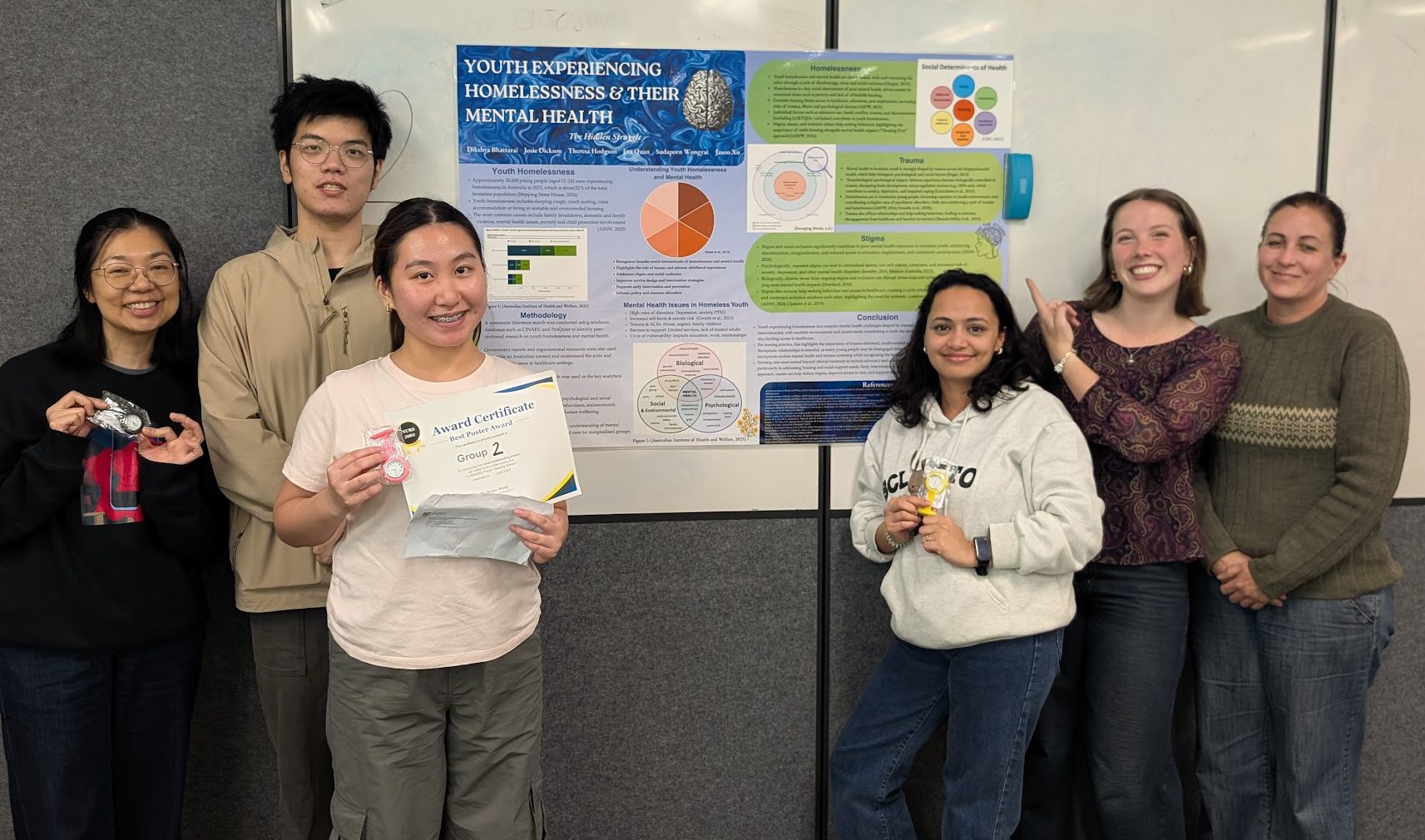
We tried a “mini-conference” approach as an alternative to the traditional group presentation across two nursing units. Although the assessments differed in content and student level, they shared a common structure. Student groups created a physical poster, displayed it in the classroom, and presented it in rotating rounds while also engaging with their peers’ work.
Assessment consistency was supported through a shared rubric, notes taken by markers during the session and, where appropriate, double-marking of a sample of presentations. These strategies helped make the format manageable while keeping the focus on interaction, understanding and communication.
How the format worked on the day
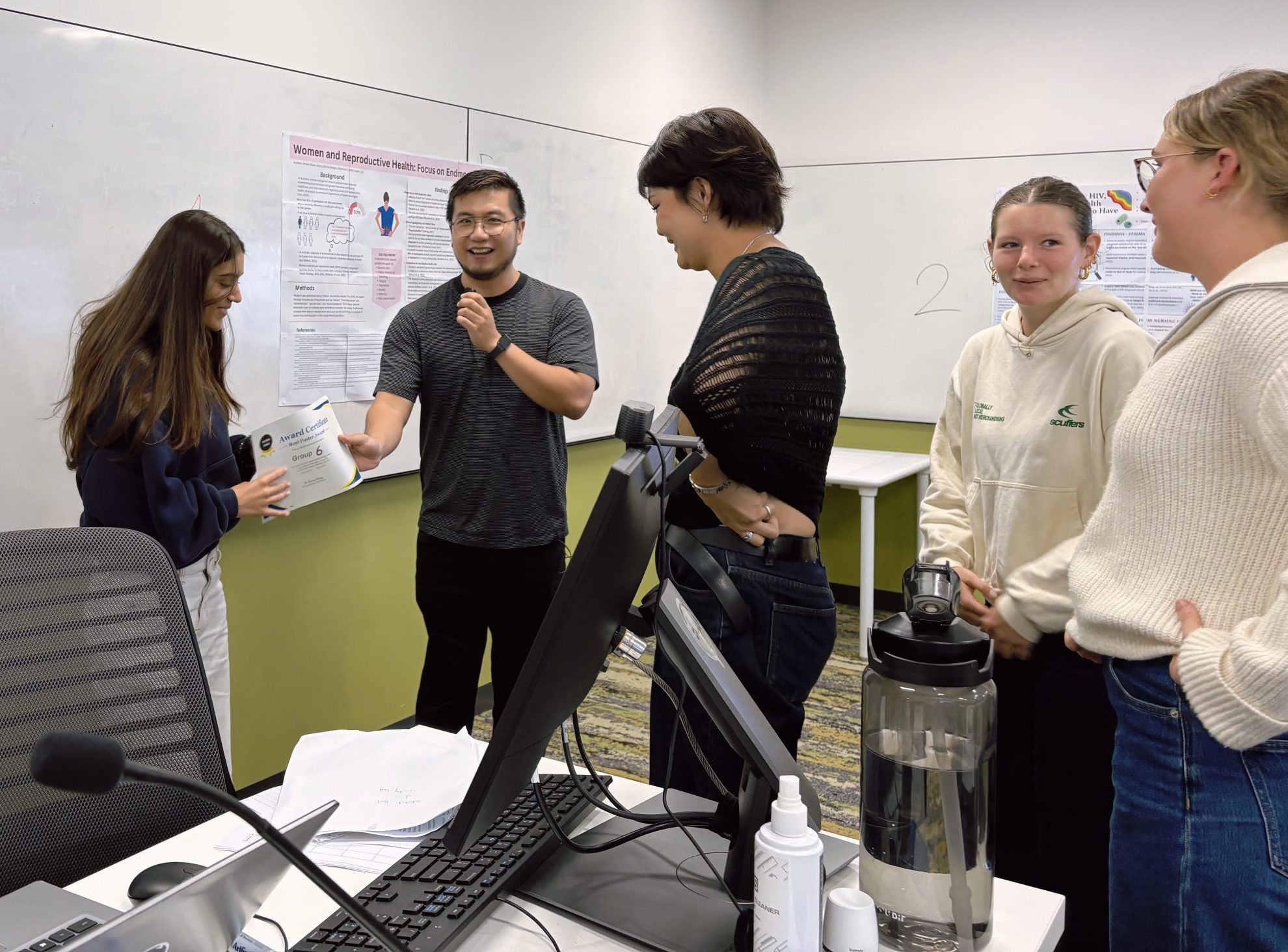
On the day, the classroom felt more like a small conference space than a traditional presentation room. In each round, some students stayed beside their poster to explain key ideas and respond to questions, while others moved around the room to view and discuss other groups’ work. Students then swapped roles, so everyone had the chance to present, ask questions and learn from their peers.
Participation was built into the assessment design from the beginning. We made it clear that contribution was broader than standing beside a poster and speaking. It also included listening carefully, asking thoughtful questions, engaging respectfully with other groups’ work and contributing to a positive learning environment.
The format was flexible enough to be adapted to different levels of learners. In the undergraduate unit, the session was closer to a walk-around poster conference, with students moving between posters across three rounds. Colour-coded lanyards helped markers identify group membership and follow participation in a busy classroom. Students also voted for a “best poster” prize, adding a fun, celebratory element that remained separate from formal rubric-based marking. In the postgraduate unit, the session was organised into smaller stations, with groups presenting in pairs or small teams, followed by questions from markers and peers. This created more space for the kind of focused questioning, in-depth explanation and critical discussion expected at postgraduate level, while also helping to manage noise levels.
From presentation to conversation
What stood out to us was not simply that students presented their work, but that they had to keep explaining, refining and responding. Rather than listening to a rehearsed presentation from start to finish, markers moved between posters and asked questions at different points.
Students could not rely on knowing only “their part” or reading from a script.
Each group member needed to understand the whole poster and be ready to explain the thinking behind it.
In practice, the session worked a little like a supportive mini-oral exam, but in a less exposed setting than presenting at the front of the class. Some students initially referred closely to their poster, but became more conversational as they explained similar ideas to different people. The room was noisier than a traditional presentation session, but in a productive way. Students compared approaches, asked follow-up questions and made links between posters. Across both units, we saw students speaking with increasing confidence and learning from one another, reflecting the value of peer learning in higher education.
In Unit of Study Survey feedback, several students specifically identified the poster presentation as a valuable part of the unit. One student described it as “very engaging and very relevant to this day and age,” while another noted that the poster task was “especially useful” because it required students to apply theories to real-world health issues and then learn through explanations from peers. Others commented that talking to other students about their posters, viewing different population groups, and using a creative assessment format helped make the learning more interactive and memorable.
very engaging and very relevant to this day and age
student participant, 2026
At the same time, the feedback also highlighted design considerations for future iterations. Some students wanted clearer guidance about poster scope, word limits and assessment expectations, while others raised concerns about uneven group contribution and how individual contributions are recognised within a busy presentation format. These comments reinforced for us that interactive poster presentations need more than a good classroom structure. They also require explicit preparation, clear criteria, opportunities for students to practise concise explanations, and transparent processes for recognising individual contribution within group work.
Making learning visible
The physical posters gave students a shared artefact and a more active role in the learning environment. In effect, the session’s learning materials were created by the students themselves. Students stood beside something they had made together, pointed to evidence, explained design choices and used visuals to support discussion. Unlike a slide deck that disappears when the presentation ends, the poster remained visible as a learning product.
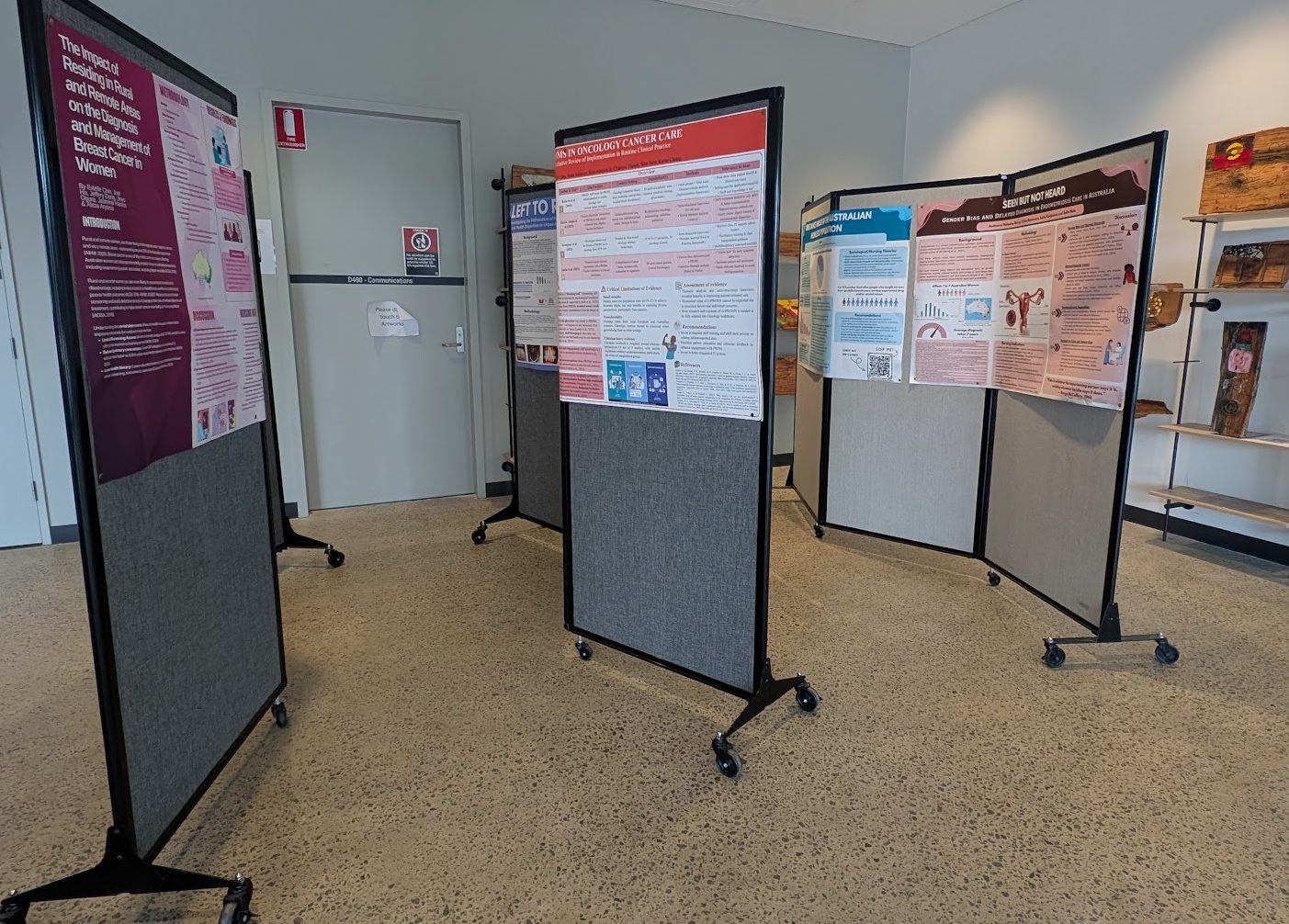
The strongest posters were later displayed publicly at the Susan Wakil Health Building as part of a curated poster exhibition*. The exhibition gave the posters a role beyond the assessment itself and showcased student learning across undergraduate and postgraduate education.
What other educators might take from this
This mini-conference approach offers a simple model for educators to consider when designing authentic and inclusive assessment. Learning happens not only through the finished poster, but also through discussion, questioning and peer exchange. The model relies on clear rotation rules, visible group identification, a shared rubric, and an expectation that students contribute as both presenters and audience members. It does not require complex technology or major curriculum redesign. The main shift is in reimagining how the classroom is used and what group presentation can look like. With some educator creativity and planning, presentation time can become a space for dialogue, feedback and shared learning, while still maintaining assessment integrity.
*We thank Susan Wakil Health Building Operations and Central Operations Services for supporting the poster exhibition through access to display space and display boards.