Some of the most engaging learning experiences happen when students stop analysing data someone else collected, and start generating it themselves. Recent advances in DNA sequencing technologies have created new opportunities to bring authentic research experiences into the undergraduate classroom. Recently, we introduced a portable, real-time sequencing device into two of our undergraduate science classes, to give students direct experience with the tools and workflows used in research and industry. Traditionally, students work with sequence data generated externally, arriving as a finished file ready for analysis. We wanted to close that gap, to give students more autonomy in the process and to transform the abstract concept of sequencing into an authentic learning experience.
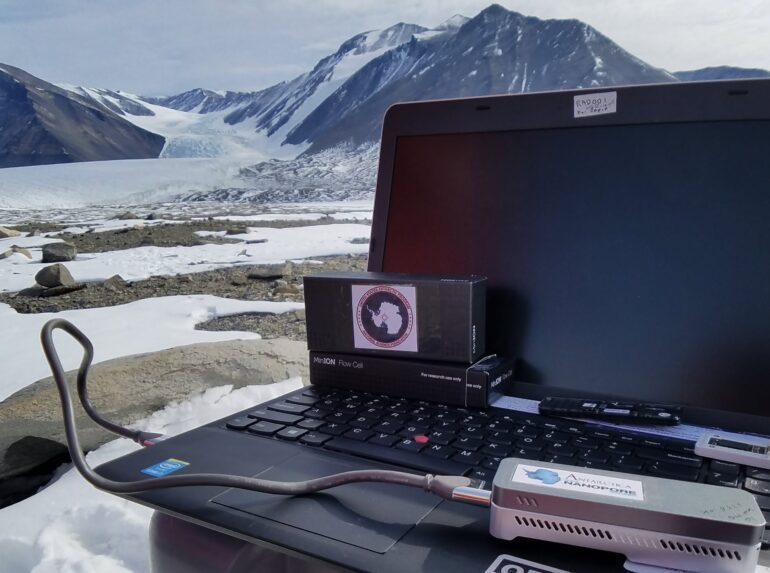
The tool that made this possible is a portable DNA sequencing device called a ‘Nanopore’, a new technology that has revolutionised our ability to obtain sequence data instantly, in almost any location. The tool is about half the size of a phone and plugs into a laptop via USB. DNA is prepared and the sequence is decoded in real time on the spot, rather than sent away to an external lab. That immediacy was the key ingredient: students could watch their own sample turn into data in front of them.
Scaling across different applications
A large class: Applied Genomics (GEGE3004; 80 students). In our first large-scale trial, student groups worked with samples tied to an active research question being studied by academic colleagues. The question centred on myrtle rust, a fungal plant disease that has driven native tree species toward extinction in Australia. Only one strain of the pathogen is currently established here, but new, potentially more damaging strains remain a biosecurity threat. The activity was modelled on a protocol that colleague and expert Dr Peri Tobias (Research Fellow, School of Life and Environmental Sciences) developed for diagnostic testing in state biosecurity departments. Student groups worked with amplified DNA samples from freshly collected, infected plant material, to help determine whether newly detected isolates from the Sydney region matched the known strain or something new. Class results were pooled and analysed together the following week.
A small class: Microbes in health and Disease – Advanced (MICR3921; 8 students). In a smaller, more advanced course, students used the same technology to investigate antibiotic-resistant bacteria they had personally isolated from the John Bruce Pye farm, Camden, in an earlier practical. Their goal was to sequence the bacterial genomes to identify the species involved, detect the specific genes responsible for antibiotic resistance, and check for mobile genetic elements that can spread that resistance between bacteria, relating their results back to their own collected farm samples.
In both settings, the technology itself was a facilitator for the design principle: give students ownership of an authentic question, and choose a tool that provides a tangible connection to the answer.
What students told us
Despite differences in cohort size and student background, similar themes emerged from student feedback. Across both groups, students valued “learning the real world applications of nanopore sequencing”, getting “hands on experience on an actual real-life scenario” and “techniques that are used in ‘real’ research”. They saw that “getting experience with nanopore sequencing to an authentic problem” would be “hugely helpful for the future”.
The main issue in both classes was timing. Students found unstructured waiting periods disengaging (“a bit too much waiting time without anything to do”). While downtime is an accurate reflection of real experimental processes, future iterations will incorporate more structured learning activities to fill waiting periods with guided tasks, so downtime becomes part of the learning rather than a gap in it. Despite this, students in the smaller class were so engaged that many stayed back after class, unprompted, simply to see the process through to completion.
Another valuable insight was the importance of peer learning. Students within the larger cohort came with more mixed prior experience: some students were confident with hands-on lab work, others much less so. Rather than treat this as a logistical problem, we’re building it into the design, deliberately pairing students with different levels of experience so stronger students can mentor others during the practical parts of the task.
Finally, students in both classes wanted more hands-on involvement, rather than watching a demonstrator handle key steps. As we become more confident and practiced with the technology, we’re planning to hand over more of those steps to students.
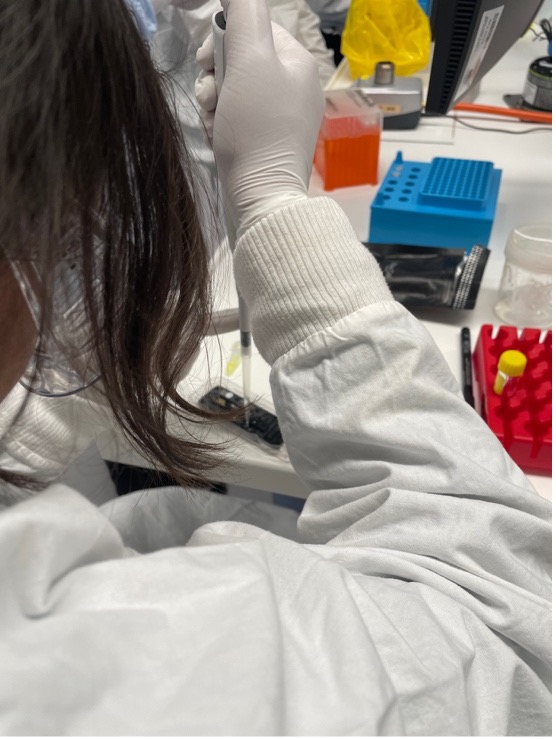
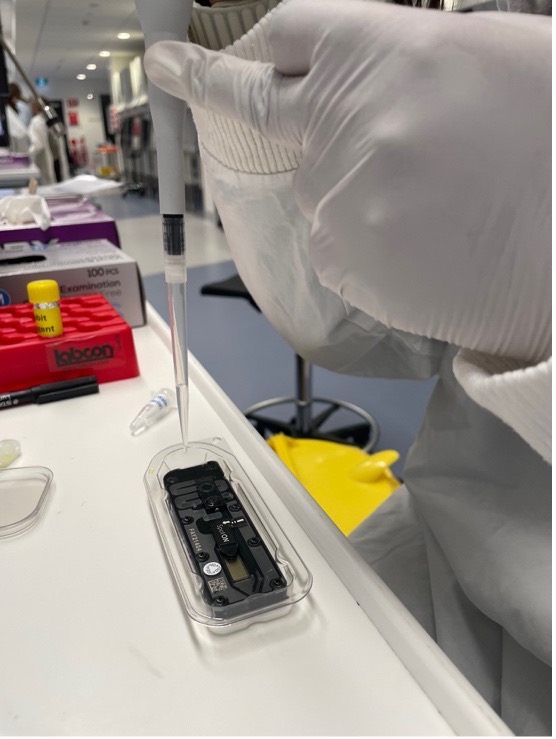
Students engaged in the experiment, loading DNA into practice Nanopore devices (Photo credit: Emily Remnant)
Harnessing technology for authentic teaching
We have shown that emerging tools can be brought into undergraduate laboratory at large and small scales and succeed in both, provided the technology is anchored to an authentic question students genuinely want to answer. The technology itself, coupled with ownership of a real problem and the interpretation of their own results, created a combined unique learning experience for diverse student cohorts.
The success of these activities was built on strong collaboration between academic staff, technical teams, demonstrators and subject-matter experts. It would not have been possible without the LEES Level 4 Technical support team, Kamrul Zaman, Tien Bui and Michael Birks, who acquired two Nanopore sequencing devices for the teaching lab and were very enthusiastic in their support to see them put to use. Both activities were co-designed with Dr Scott Mitchell, a highly skilled Nanopore user and talented educator whose creative logistical inputs were critical to success. The experimental and analysis pipelines were supported by Dr Peri Tobias, whose time, encouragement and computational infrastructure were indispensable.
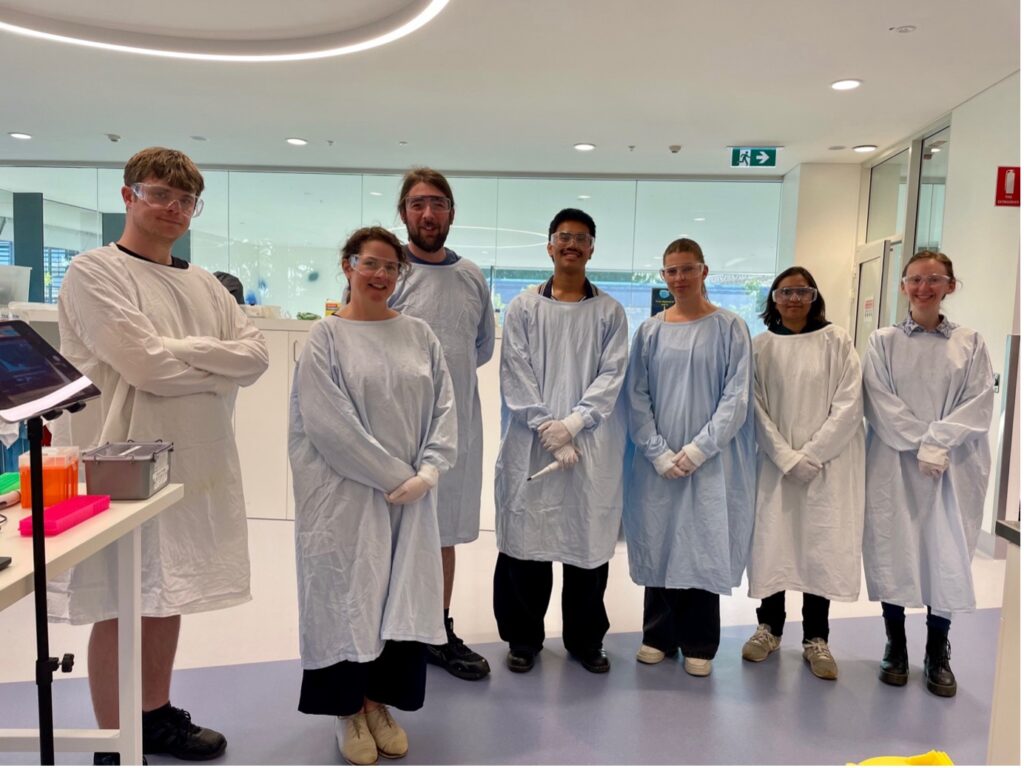
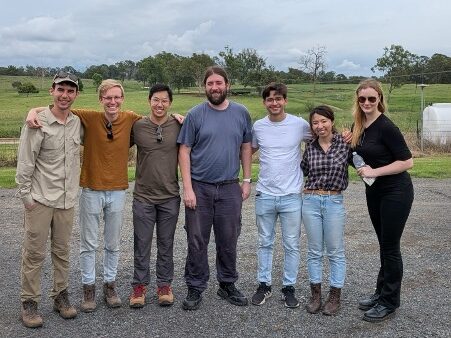
(L to R) GEGE3004 teaching team: Jacob Downs, Emily Remnant, Scott Mitchell, James Damayo, Elouise Bacon, Urooj Ali and Chloe Gardner; and the MICR3x21 teaching team: Brodie Gillieatt, Nicholas Gracie, Lachlan Lai, Scott Mitchell, Miguel Perea Brugal, Mirei Okada, Bianca Cully-Duse
Author’s note: We thank Alice Huang, Emma Thompson and Tim Newsome for comment on the original draft. We used Claude and Co-Pilot to edit our original draft, and incorporated elements of both AI versions into a final human-edited version. You can access the original human-authored draft, the prompts and AI outputs and final tracked human edits here.