This semester, I experimented with something I had never formally incorporated into my teaching before: producing a podcast with final-year anthropology students reflecting on their experiences studying the discipline. Like many educators, I spend a great deal of time thinking about assessment design, classroom engagement, and student retention. But I increasingly found myself wondering about a different question: when do students get the opportunity to narrate their own educational journeys, in their own words?
Final-year students occupy a distinctive position within the university. They have enough distance from first-year uncertainty to reflect on what they have learned, but remain close enough to the everyday realities of student life to speak candidly about its challenges and possibilities. Their insights often reveal dimensions of teaching and learning that remain difficult to capture through surveys, evaluations, or formal assessments. The podcast emerged from that idea.
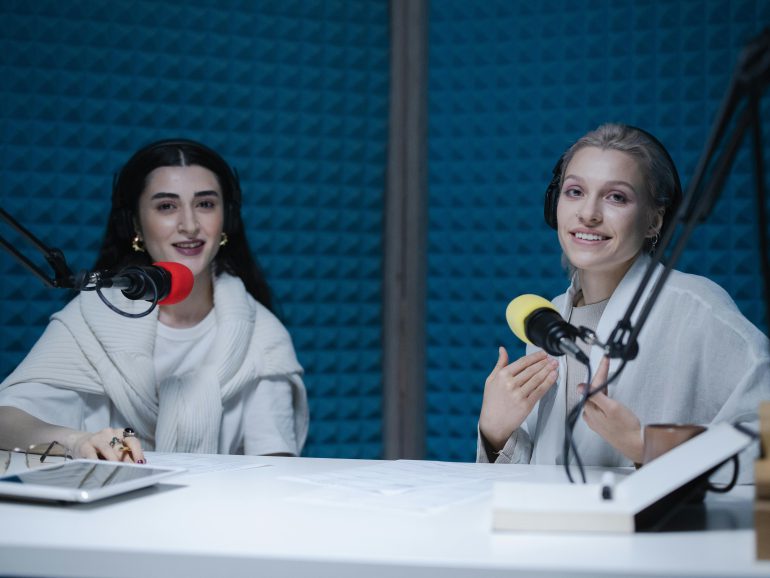
I invited four students enrolled in my third-year anthropology unit to participate in a recorded conversation about their experiences studying anthropology: what had surprised them, challenged them, frustrated them, transformed them, and what they would carry beyond graduation. The target audience included prospective Bachelor of Arts students, as well as first- and second-year students enrolled in anthropology units. At the same time, the podcast became a reflective resource for teaching staff and for me as unit coordinator, offering insight into how students experience the course, what they identify as its strengths and challenges, and how we might build on the former while responding more effectively to the latter.
Why a podcast?
Podcasts have been proven innovative and useful tools for the delivery of teaching, the design of assessments, and the promotion of student learning and development. The incorporation of podcasts into teaching also aligns with a growing emphasis in higher education on amplifying student voices and supporting staff-student knowledge co-creation. Podcasting offers an accessible and surprisingly effective way to bring these commitments together.
Podcast conversations foreground tone, humour, hesitation, emotion, and spontaneity. They create space for forms of expression that can be difficult to capture in written academic work. For the students involved, the format felt less evaluative than a formal presentation. Several reflected afterwards that speaking conversationally allowed them to recognise connections across the degree that they had not previously articulated.
As anthropologists, we ask students to listen carefully, attend to everyday experience, and reflect critically on the worlds they inhabit. Podcasting draws on many of these same skills. Students became interviewees, storytellers, interlocutors, and analysts of their own educational experiences. One of the most striking themes across the conversations was how often students described anthropology as changing not simply what they thought, but how they thought. The discussions became a reminder that disciplinary learning is not only about acquiring content knowledge. It is also about shifts in attention, habits of inquiry, ethical commitments, and ways of relating to others.
What I learned as a teacher
Unexpectedly, the podcast also became a form of feedback. Listening to students reflect across several years of study offered insights into which classroom moments stayed with them, which activities fostered belonging, and where students experienced uncertainty or disconnection. Students rarely spoke first about grades. Instead, they returned to moments of discussion, relationships with peers, opportunities to experiment intellectually, and experiences of feeling recognised or challenged. At a time when universities are increasingly asked to demonstrate impact through measurable outcomes, creating spaces for students to narrate educational experience in richer ways feels increasingly valuable.
Simple steps to podcasting with students
Creating a podcast need not be technically complex or time intensive-simple recording tools, light editing, and a conversational format can make podcasting an accessible and low-barrier way to generate and share knowledge. Here are some simple steps to making a podcast with your students.
- Decide the purpose. Who is the podcast for? Prospective students, current students, alumni, staff? Clarify the audience and the theme.
- Keep the format simple. Choose one format only:
ÔÇó One host + one student (20-30 mins)
ÔÇó One host + two or three students (30-40 mins) - Recruit students thoughtfully. Invite expressions of interest through Canvas or a short form. Ask why students want to participate, topics they would like to discuss, and obtain consent for recording and publication. Aim for a diversity of experiences, interests, and future pathways.
- Prepare prompts, not scripts. Avoid scripting answers. Instead, create six to eight open questions. Examples:
ÔÇó Tell us a little about yourself.
ÔÇó What drew you to this discipline?
ÔÇó What surprised you most?
ÔÇó What advice would you give someone starting this degree?
ÔÇó What skills will you take beyond university?
ÔÇó How would you described your discipline three key words? - Organise recording logistics. The minimum requirements to record a podcast are:
ÔÇó A quiet room
ÔÇó A laptop
ÔÇó Headphones
ÔÇó Recording software (I used the free and user-friendly software, Riverside) - Create a relaxed atmosphere. Before recording, reassure students that this is an informal conversation rather than a performance. Emphasise that they are not being assessed, that there are no perfect answers, that reflections, stories, and surprises matter more than polished delivery, and that mistakes can be edited. Do a sound check before recording to ensure everyone’s setup works properly.
- Edit lightly. Editing can remain minimal: remove long pauses, repetition, or technical glitches. Simple additions such as introductory music and a short welcome can also help structure the episode.
- Seek approval and publish. Send students the final recording before publication and invite feedback or requests for changes. Possible distribution platforms include Canvas, the Discipline or School webpages, the student newsletter (Honi Soit), as well as public platforms such as SoundCloud, YouTube, and Spotify. When publishing the podcast, make sure to include a clear episode title, short description, participant bios, timestamps, a transcript where possible, and permissions for any media used.
Listen to Sophie’s co-created podcast here: Studying Anthropology@Sydney